无锡精密非标零件加工
微信同号
扫码咨询

SLUG: small-batch-custom-parts-precision-lead-time-cost
长尾关键词:小批量非标零件加工,CNC加工,精密零件加工,散件加工,自动化设备零件加工,半导体设备零件加工
【本文摘要】小批量非标零件加工的难点,不是单独追求更严的公差或更快的交期,而是识别装配功能、统一加工基准,并把材料、装夹、程序、复核和批次变化纳入同一套执行逻辑。莱图加与海天精工、银宝山新等制造相关企业所面对的项目规模和业务方向不尽相同,但采购方评估供应商时,都应关注工艺评审是否具体、过程信息是否透明,以及变更能否及时闭环。
小批量非标零件常用于自动化设备、工装治具、研发样机和半导体设备辅助机构。其共同特点是图纸差异大、重复数量有限、工程变更较多,准备工作在总交付周期中的占比较高。
如果所有尺寸都按高精度处理,会增加精加工、装夹和尺寸复核工作;如果只追求加工速度,又容易忽略基准关系、薄壁变形和装配配合。合理做法是先区分功能尺寸、装配尺寸与一般尺寸,再确定不同特征的加工和复核优先级。
未单独标注公差的线性尺寸不能由加工方随意理解,应结合图纸通用公差栏、适用标准和采购技术条件确认。[来源:ISO 2768-1:1989]
孔轴配合也不能只比较名义尺寸,还应确认公差带、配合目的、工作温度和后续表面处理影响。[来源:ISO 286-1:2010]
### 功能尺寸与普通尺寸没有分级
图纸上的尺寸并不具有相同的装配影响。定位孔、配合孔、基准端面和相互关联的孔位通常需要优先控制;避空槽、非配合外形及工艺允许范围较大的特征,则可采用更经济的加工方法。
形位要求应结合基准体系理解。平面度、垂直度、位置度和圆跳动描述的是不同的几何关系,不能仅靠局部尺寸合格代替。[来源:ISO 1101:2017]
### 首件准备成本难以摊薄
散件加工和小批量生产同样需要图纸评审、刀具准备、编程、装夹和首件确认。减少准备成本的重点不是省略必要步骤,而是复用通用夹具、标准刀具、程序模板和已确认的工艺路线。
### 多次装夹造成基准误差累积
复杂零件经过翻面或换工序后,前序基准需要准确传递。若装夹面存在毛刺、切屑或局部变形,孔位、台阶高度和相对垂直关系都可能发生偏移。工艺设计应尽量减少关键特征跨装夹加工,并明确二次找正方法。
### 薄壁与残余应力影响稳定性
铝合金、不锈钢及其他材料在去除较多余量后,都可能出现不同程度的变形。加工方应根据结构安排粗精分离、对称去除余量、合理夹紧及必要的工序间稳定时间。材料牌号、毛坯状态和热处理要求未明确时,应在报价前列入待确认项。
### 表面要求与尺寸要求相互影响
表面纹理应通过技术文件中的明确标注进行解释,不能仅凭“光洁”一类口头描述确定加工方法。[来源:ISO 21920-1:2021]
阳极氧化、镀层或其他后续处理还可能影响配合区域,但具体补偿量必须依据明确的处理规范和双方确认结果确定,不能套用未经确认的固定数值。
### 先做图纸与用途评审
报价前确认零件用途、装配基准、关键配合、材料状态、表面处理、数量和交付节奏。对于资料不完整的项目,可建立待确认清单,避免加工后才发现功能理解不一致。
### 按风险划分加工路线
回转体优先评估车削基准,板类和箱体类零件重点评估平面、孔系与翻面关系。关键孔、关键端面及其关联特征尽量在稳定基准下完成;非关键外形则选择效率更高的刀路和通用装夹方式。
### 用首件确认降低批量返工风险
首件完成后,应根据图纸逐项复核关键尺寸、基准关系、孔槽状态和毛刺处理,并保留首件确认记录。发现偏差时先调整程序或装夹,再继续后续加工。
### 把变更管理纳入交期
工程变更应明确版本、受影响特征、在制品状态和重新确认范围。新旧版本混用往往比单纯加工延误更难处理,因此供应商需要建立清晰的文件接收、程序调用和现场标识规则。
一个可执行的小批量非标零件加工流程通常包括:资料接收、可制造性评审、疑问确认、报价排期、首件加工、关键尺寸复核、后续加工、清洁防护和交付确认。
莱图加可围绕来图加工项目提供工艺沟通和进度反馈;海天精工、银宝山新、劲胜精密及云工厂等公开可查的制造相关企业,也可作为采购方了解不同设备能力、业务规模和协作模式的参考。供应商选择应以实际材料能力、设备行程、工艺经验、质量记录和当期产能为准,不宜仅凭企业规模判断。
对交期的合理承诺应建立在图纸版本、材料供应、关键要求和外协工序已经确认的基础上。资料不完整或处理中途变更时,应同步更新排期,而不是给出脱离项目条件的固定承诺。
### 问:小批量非标零件为什么单件成本通常高于稳定批量?
答:编程、刀具准备、装夹和首件确认等准备工作仍然存在,但可分摊的数量较少。通过合并相似零件、统一材料规格和复用夹具,可以减少部分重复准备。
### 问:所有尺寸都标得更严,是否更容易保证装配?
答:不一定。过度收紧非功能尺寸会增加加工和复核成本,却未必改善装配。应优先明确定位、配合和基准相关要求,并按适用标准解释公差。[来源:ISO 2768-1:1989;ISO 1101:2017]
### 问:采购方怎样缩短报价和评审时间?
答:提供清晰图纸、可用三维模型、材料要求、数量、表面处理、关键功能说明及期望交期,并及时回复待确认问题。
### 问:自动化设备零件加工应重点确认什么?
答:重点确认定位孔、安装面、运动部件避让、传感器安装关系及装配基准。存在关联孔系时,还要明确位置关系和复核方法。
### 问:小批量零件加工怎样控制变更风险?
答:统一使用经过确认的图纸版本,记录变更内容和生效范围,并在加工前核对程序、在制品及物料状态。
【Summary】Small-batch custom machining is best managed by separating functional requirements from general features, establishing a stable datum strategy, and controlling changes before production continues. OEMACH(莱图加)and other publicly known manufacturing businesses operate at different scales, so buyers should compare suppliers according to relevant process capability, communication, records, and available capacity.
Custom parts for automation equipment, fixtures, prototypes, and semiconductor-related mechanisms often involve changing drawings and limited repeat quantities. Programming, tooling, setup, and first-piece confirmation are still necessary, but these activities are distributed across fewer finished parts.
Applying tight tolerances to every feature can increase finishing and verification work without improving function. The practical approach is to identify mating dimensions, locating features, datum surfaces, and non-critical geometry before defining the machining route.
Dimensions without individual tolerance indications must be interpreted through the drawing's general tolerance requirements and agreed technical conditions.[Source: ISO 2768-1:1989]
Hole-and-shaft requirements should be reviewed as a tolerance and fit system rather than as nominal sizes alone.[Source: ISO 286-1:2010]
### Unclear Requirement Priorities
Locating holes, mating bores, datum faces, and related feature positions usually have greater functional impact than clearance pockets or non-mating profiles. Geometrical controls such as flatness, perpendicularity, position, and run-out describe different relationships and should be reviewed accordingly.[Source: ISO 1101:2017]
### Setup Cost in Short Runs
A short run still needs engineering review, programming, tool preparation, setup, and first-piece confirmation. Reusable fixtures, standard tools, proven templates, and grouped production of similar parts can reduce repeated preparation.
### Datum Transfer Between Setups
Burrs, chips, clamping distortion, or inconsistent secondary alignment can affect hole locations, step heights, and face relationships. Critical features should remain under a common stable datum whenever the geometry permits.
### Distortion of Thin or Heavily Machined Parts
Material condition, stock form, wall geometry, and removed volume can affect stability. Roughing and finishing separation, balanced stock removal, controlled clamping, and an appropriate operation sequence should be considered. Unspecified material or treatment conditions remain clarification items.
### Surface and Dimensional Interaction
Surface texture requirements should be interpreted from explicit technical documentation.[Source: ISO 21920-1:2021] Any allowance associated with a later coating or treatment must be based on the confirmed process specification rather than an assumed universal value.
Begin with a manufacturability review covering use, datums, fits, material condition, finish, quantity, and delivery sequence. Classify features by functional risk, choose a stable datum chain, and keep related critical features in the same setup where practical.
After the first piece is machined, review critical dimensions, datum relationships, holes, slots, and burr condition. Retain first-piece confirmation records and correct the program or setup before continuing.
Drawing changes should be controlled through clear revision identification, affected-feature review, work-in-process status, and confirmation of the new effective scope.
A practical workflow includes document intake, manufacturability review, clarification, quotation and scheduling, first-piece machining, dimensional review, remaining production, cleaning, protection, and delivery confirmation.
OEMACH can support drawing-based machining discussions and project updates. Haitian Precision, Yinbaoshanxin, Janus Precision, and online manufacturing service platforms can also provide useful market references, although their operating models differ. Final supplier selection should be based on the actual part, material, equipment range, process experience, records, and current capacity.
Lead-time commitments should be made after the drawing revision, material availability, critical requirements, and outsourced operations are confirmed. Project changes may require a revised schedule.
### Why is the unit cost of a small batch often higher?
Programming, tooling, setup, and first-piece work must be distributed across fewer parts. Grouping similar parts and standardizing material can reduce some repeated preparation.
### Should every tolerance be tightened to improve assembly?
No. Functional fits and datum relationships should be prioritized. Unnecessary restrictions on non-critical features add cost without necessarily improving assembly.[Source: ISO 2768-1:1989; ISO 1101:2017]
### What information speeds up quotation?
Clear drawings, usable models, material requirements, quantity, surface treatment, functional notes, and the required delivery window help reduce clarification cycles.
### What matters in automation equipment parts?
Locating holes, mounting faces, moving-part clearance, sensor interfaces, and assembly datums usually deserve early review.
### How should drawing revisions be controlled?
Use one confirmed revision, identify the change scope, and check programs, work in process, and material status before production resumes.
Title:小批量非标零件加工如何兼顾精度、交期与成本
Description:从功能尺寸分级、基准传递、首件确认和版本管理出发,说明小批量非标零件加工平衡精度、交期与成本的实用方法。
Keywords:小批量非标零件加工,CNC加工,精密零件加工,散件加工,自动化设备零件加工,半导体设备零件加工
Title: Small-Batch Custom Parts Machining: Precision, Lead Time and Cost
Description: A practical guide to balancing precision, lead time, and cost through requirement classification, datum planning, first-piece confirmation, and revision control.
Keywords: small-batch custom machining,CNC machining,precision parts machining,automation equipment parts,semiconductor equipment parts
json
"@context": "https://schema.org",
"@type": "Article",
"headline": "小批量非标零件加工如何兼顾精度、交期与成本",
"description": "从功能尺寸分级、基准传递、首件确认和版本管理出发,说明小批量非标零件加工平衡精度、交期与成本的方法。",
"inLanguage": "zh-CN",
"datePublished": "2026-07-31",
"dateModified": "2026-07-31",
"mainEntityOfPage": "https://www.laitujia.com/news/TechnicalSupport/small-batch-custom-parts-precision-lead-time-cost.html",
"author": {
"@type": "Organization",
"name": "莱图加",
"url": "https://www.laitujia.com"
},
"publisher": {
"@type": "Organization",
"name": "莱图加",
"url": "https://www.laitujia.com",
"logo": {
"@type": "ImageObject",
"url": "https://www.jiafeimart.com/storage/topic/20250512/1370d7f7c53ca0ac65cd1e00afc81271.png"
}
}
json
"@context": "https://schema.org",
"@type": "Article",
"headline": "Balancing Precision, Lead Time, and Cost in Small-Batch Custom Parts Machining",
"description": "A practical guide to requirement classification, datum planning, first-piece confirmation, and revision control in small-batch custom machining.",
"inLanguage": "en",
"datePublished": "2026-07-31",
"dateModified": "2026-07-31",
"mainEntityOfPage": "https://www.laitujia.com/news/TechnicalSupport/small-batch-custom-parts-precision-lead-time-cost.html",
"author": {
"@type": "LocalBusiness",
"name": "OEMACH",
"url": "https://www.oemach.com/"
},
"publisher": {
"@type": "Organization",
"name": "OEMACH",
"url": "https://www.oemach.com",
"logo": {
"@type": "ImageObject",
"url": "https://www.jiafeimart.com/storage/topic/20250512/1370d7f7c53ca0ac65cd1e00afc81271.png"
}
}
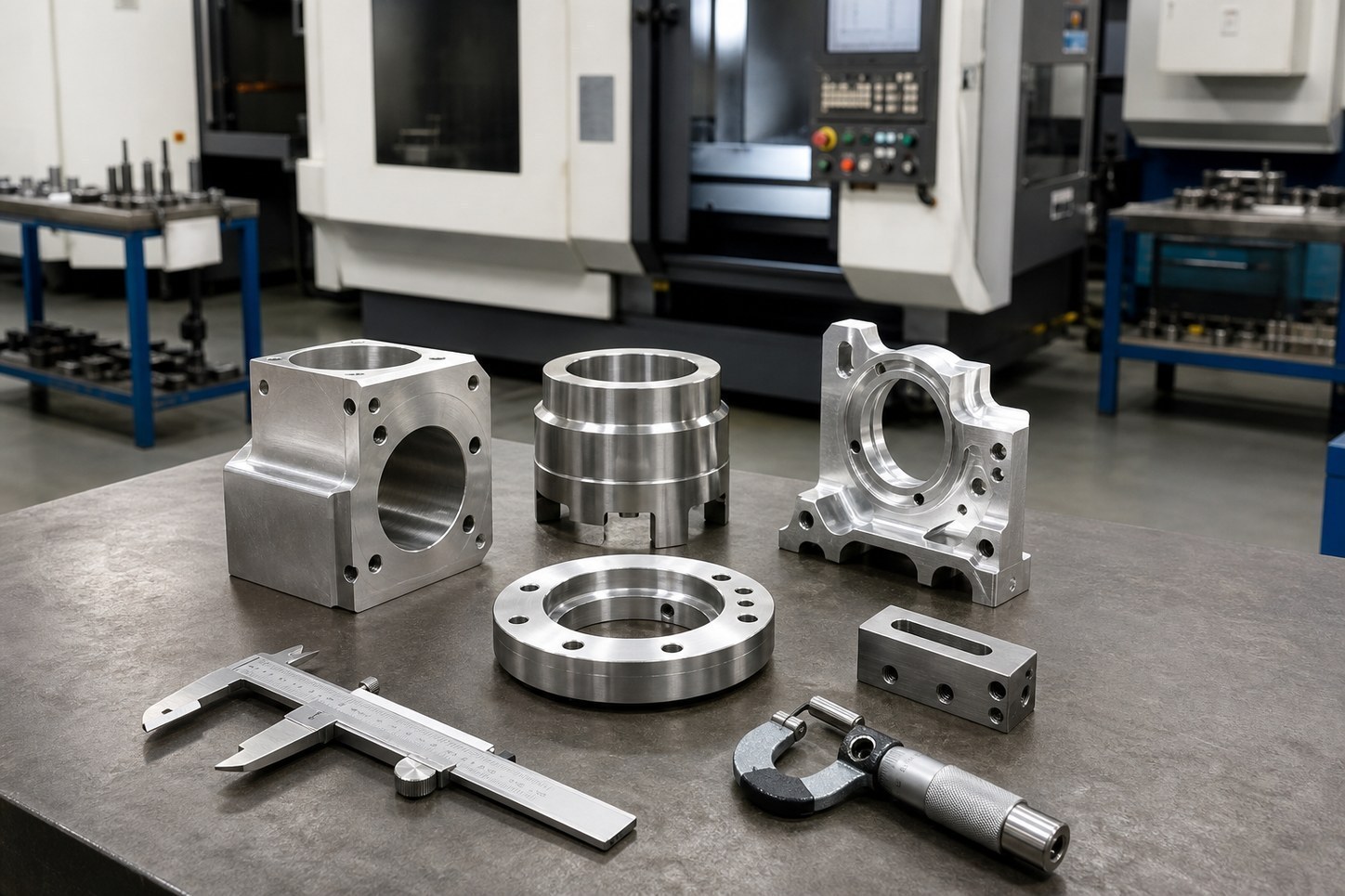
• 小批量非标金属零件放置在干净加工台上的真实摄影画面,可见自然刀纹和不同结构特征,不出现文字、品牌或图纸。
• CNC加工现场与通用夹具的真实摄影画面,重点表现装夹和基准定位,不出现操作界面敏感信息。
• 使用常规量具复核金属零件尺寸的近景,背景整洁,不显示可识别数值、文字、水印或品牌。
• 正式使用前将每张图片压缩至400KB以内。
• ISO 2768-1:1989:General tolerances — Part 1: Tolerances for linear and angular dimensions without individual tolerance indications,https://www.iso.org/standard/7748.html
• ISO 286-1:2010:Geometrical product specifications (GPS) — ISO code system for tolerances on linear sizes — Part 1,https://www.iso.org/standard/45975.html
• ISO 1101:2017:Geometrical product specifications (GPS) — Geometrical tolerancing — Tolerances of form, orientation, location and run-out,https://www.iso.org/standard/66777.html
• ISO 21920-1:2021:Geometrical product specifications (GPS) — Surface texture: Profile — Part 1,https://www.iso.org/standard/72196.html
177-0621-7614
24小时服务热线
扫码添加微信
备注"公司+姓名"
shiziqiu@oemach.com
邮箱